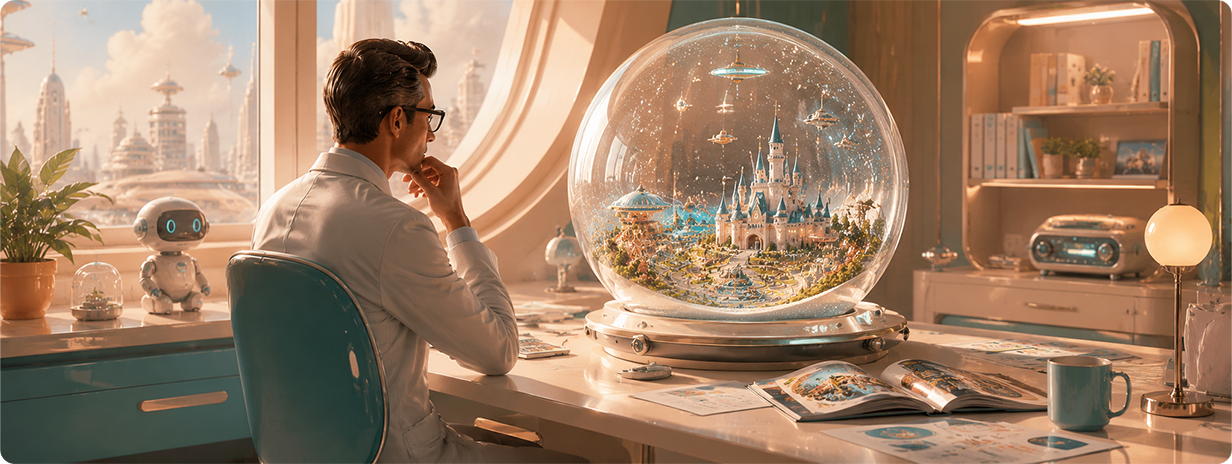
The best role model for pharma marketers isn’t another pharma company or any other health-adjacent organization. It’s the company that brought you Simba, Mary Poppins and Mickey Mouse.
For years I’ve told colleagues and students how The Walt Disney Company has solved a problem healthcare has long struggled with: Turning a series of seemingly unrelated transactions into a relationship that lasts a lifetime. What I keep coming back to is that Disney doesn’t just make movies or operate theme parks. Rather, it’s a builder of worlds people want to live inside, return to and pass down to their kids.
In forging these bonds, Disney has leveraged nearly every conceivable way to deepen customer relationships across generations young and old. That’s why the lesson for healthcare marketers starts here. Rather than focusing solely on transactions or services, we have the opportunity to build end-to-end experiences that make patients feel supported, informed and valued.
Pharma companies need to take a cue not just from Disney’s overarching approach, but from its evolution over the years. Every one of its myriad transformations – the acquisitions of Pixar and Marvel, its ventures into music and broadcast television, and many more – has been made with the goal of building a connected ecosystem. In Disney’s case, that now spans streaming platforms, mobile applications, physical environments and digital experiences.
At every touchpoint the company delivers a seamless and emotionally engaging experience. It moves fluidly between platforms, devices and environments, rather than relying solely on traditional channels like theatrical releases and theme parks.
For pharma, the equivalent is building seamless experiences across digital platforms, in-person care and support systems. Think a connected ecosystem of care, rather than a set of disconnected processes.
What makes Disney stand out is not just its presence across all its platforms, but the consistency of the experience. Whether someone is watching a film, using the Disney app in a theme park or engaging with content on social media, they are part of a connected, cohesive story. That consistency is exactly what creates trust and long-term loyalty – and it’s what marketers hoping to effect stronger patient-centered engagement should be aiming for.
The Disney Lesson for Pharma
Today’s customers expect more than information; they expect engagement, personalization and friction-free experiences. That means pharma companies must rethink not just what they communicate, but how they communicate it. In healthcare, that’s where technology, including AI, becomes essential. Companies must be more proactive about employing it to personalize communication and simplify access.
Along those lines, Disney has continually adapted with the times. The shift from theaters to streaming wasn’t just a distribution decision; it was a transformation in how audiences interact with content. Enter the Disney+ streaming platform, which allows users to engage with stories on demand, thus deepening relationships with its brand and characters. Pharma faces its own version of that shift, as patients increasingly expect to engage with their care on their own terms and timetables.
At the same time, Disney continues to evolve its in-person experiences as technology opens up opportunities for stronger engagement. Theme parks now integrate mobile technology, real-time updates and personalized planning tools that enhance the guest experience. Disney doesn’t just react to changing behavior; it anticipates and shapes it.
Forward-thinking healthcare organizations must do the same. Every brand’s goal should be to design for where patients are headed, not just where they are today.
The Power of Experience-Driven Relationships
Pharma can also learn from Disney’s mastery of storytelling, which evolves narratives into something immersive and continuous. A movie doesn’t end when the credits roll; it extends into streaming series, merchandise, games and physical attractions. Each touchpoint strengthens the relationship between the brand and its audience.
Applied to healthcare, the same principle means using storytelling to make complex medical experiences more human and relatable. Even pharma’s biggest boosters acknowledge that this is an area where the industry has fallen woefully short over the years.
Disney’s ability to connect physical and digital experiences shows how important it is to accommodate the entire customer journey, not just isolated moments. The company thinks beyond campaigns and designs ecosystems. For healthcare marketers, that requires devoting more thought to what happens after a prescription is written or an office visit concludes. Their game plans should encompass everything from the first symptom to long-term condition management.
At the heart of Disney’s success, however, is something deeper than distribution or technology. It is the ability to build worlds where people want to be. This is made possible through four critical strengths, each with a clear parallel for healthcare marketers.
Being at the forefront of technology: Disney consistently invests in emerging technologies to enhance how audiences engage, whether through streaming platforms, mobile integration in theme parks or interactive digital experiences. Technology is not used for its own sake, but as a tool to remove friction and deepen connection. In healthcare, the same standard must apply. Technology, including AI, should simplify access and guide patients, not add complexity to patient and HCP lives that are already overburdened.
Emotional storytelling: Disney understands that stories drive human connection. Its content resonates across generations because it taps into universal emotions, ranging from hope and adventure to belonging and resilience. This emotional foundation turns casual viewers into lifelong fans. For pharma, storytelling can help make a complex medical experience feel human and relatable, rather than clinical and remote.
Experience design across touchpoints: Every interaction with Disney is intentionally designed, from the moment someone watches a film to their navigation of a theme park or interaction with an app. These experiences are not isolated; they reinforce one another. The patient experience should be designed with the same intentionality, uniting digital platforms, in-person care and support systems into one coherent whole.
Cultivating brand loyalty: Because Disney delivers consistent, emotionally engaging experiences, it builds trust and loyalty over time. Customers both consume their content and form long-term relationships with the overarching brand. The same consistency, applied to patient-centered engagement, could be what earns pharma companies the trust and loyalty they covet.
The implication of the Disney model extends beyond entertainment. Only the organizations that shift from transactional thinking to experience-driven ecosystems can build relationships that make patients feel supported, informed and valued.
Pharma companies that create a connected ecosystem of care that reaches people where, when and how they want to connect will not just transform their experiences, but also how they engage with a brand. Marketers who incorporate this mindset will be positioned to lead into the future.
Linda Daniels is an organization transformation and change leader at Merck. The views expressed in this piece are the author’s own.