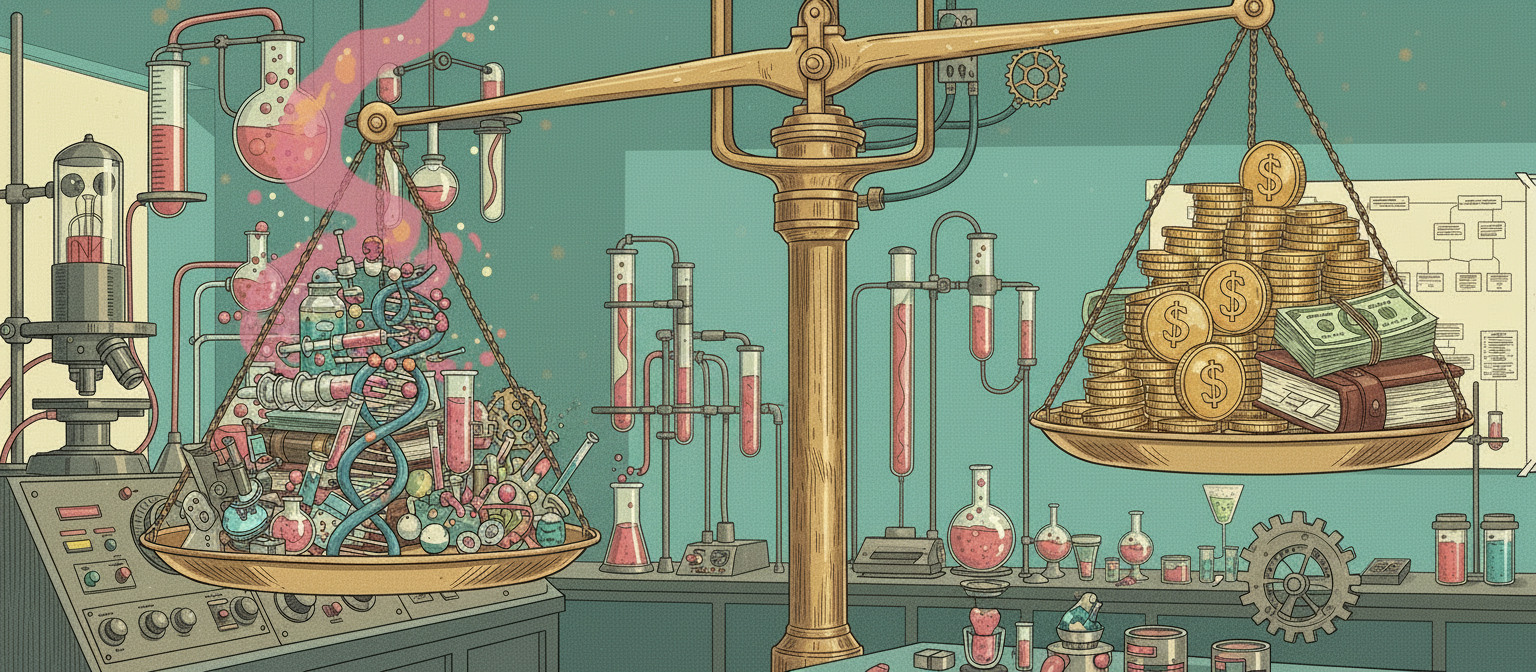
During stretches when life sciences budgets tighten and head counts freeze in place, it’s presumed that innovation will be one of the first casualties. Pilot programs will become fewer and further between; exploratory marketing partnerships will go the way of the manatee. While innovation may remain a touchstone in corporate strategy presentations and keynote speeches, in practice it will become less an operational mandate than an aspirational talking point.
“Every leader wants to focus on innovation,” notes Stacy Stone, executive director, omnichannel and customer engagement, at Pacira BioSciences. “But when you have deadlines, limited team members or limited budget you sometimes have to prioritize different things. And I can’t think of anyone who’s not lean in one of these areas at the moment.”
Such circumstances leave life sciences marketers to ponder a thorny question. What can they do to fuel an organizational appetite for innovative thinking while their employers may be in batten-down-the-hatches mode?
To hear a handful of industry vets tell it: Plenty. The goal, they believe, should be to redefine what innovation means during such periods.
Jenna Parenton, former director, consumer marketing at Dermavant Sciences, acknowledges that “leaving room for innovation in times of lean budgets can be tough.” She adds, however, that “innovation isn’t always about spending more money. It can be about thinking smarter and making your resources work harder for your brand. Often, the most creative ideas come from the constraint.”
Geetha Parachuru, director of commercial digital products at Gilead Sciences, has an altogether different take: “I’m a firm believer that the best innovation comes from people who are inherently scrappy, work with a low budget and are somewhat lazy,” she says. “This persona finds the most basic premise needed to fix a problem and focuses only on that.”
Clearly it doesn’t do anyone any good to sit around and wait for the budget pendulum to swing in the other direction. The key may lie in embracing a paradox: That innovation may feel most unattainable during the periods when it could prove most valuable, even though the instinct of many marketers during such periods is to default to safe, known options. You can’t get called on the carpet for doing what’s always been done, right?
Marketing teams need to adjust their expectations accordingly. During leaner times, big swings – bets on new platforms, wholesale revamps of commercial models – aren’t likely to make it out of brainstorming sessions. But companies that expand their definition of innovation to include incremental advances, like rethinking wasteful or outdated processes and identifying more efficient ways to deploy the resources they still have at their disposal, are likely to thrive independent of the broader economic climate.
Such a reframing embeds innovation as an operating principle. It becomes less about grand, often expensive experimentation and more about developing muscle memory for consistently questioning assumptions, A/B testing incremental changes and moving on when a project misses its mark. It also eliminates “we don’t have budget for that” as an excuse.
“When looking to incorporate innovation into your plans, it is imperative to have a clear picture of what you’re trying to learn, what you are looking for in the data and a clear picture of ROI,” Parenton stresses. “Test small and be willing to kill or pivot quickly if the results aren’t there. Over time, I’ve learned that proving ROI from a small, yet innovative tactic can build trust and confidence from leadership, leading to more robust budgets in the future.”
That confidence is a bigger piece of the puzzle in challenging times than it is in flush ones. If top leaders treat innovation as discretionary during down periods, it will have a cascading effect on lower levels of management and brand-team heads. An absence of a permission structure is as likely to thwart ambitious thinking as a budget shortfall.
If there’s a playbook to be written for innovation while belt-tightening, its hypothesis might be something along the lines of: Innovation as a process shouldn’t be put on the backburner when times get tough. To ensure that its flame isn’t extinguished, people at all levels of an organization should always be thinking about how to make processes, products and systems more nimble, efficient, valuable and engaging. They should ask different questions of existing information, audit anything/everything that’s not working and iterate ruthlessly.
As Asif Ali, director, omnichannel enablement at Sanofi puts it: “Innovation during challenging times takes real courage. When you have budget, strong leadership and a great engineering team, innovation is almost inevitable. But when there’s a lack of them, it becomes far more difficult. You simply can’t innovate out of thin air.”
***
This story is an introductory salvo of sorts for the Kinara Innovation Index, a series we plan to launch next month. In it, we’ll examine how life sciences companies actually approach innovation – not the aspirational version presented at industry events, but the structures, leadership, investment and cultural dynamics that determine whether new ideas live or perish. We’ll analyze where internal innovation efforts succeed or stall, and what the future of commercial innovation in pharma actually looks like when you strip away the jargon.
Our goal: To provide practical guidance for leaders trying to build an innovation engine that hums. If your organization is interested in being featured in the Innovation Index, shoot us a note at hello@kinara.co.